Published on:
July 24, 2025

July 2025
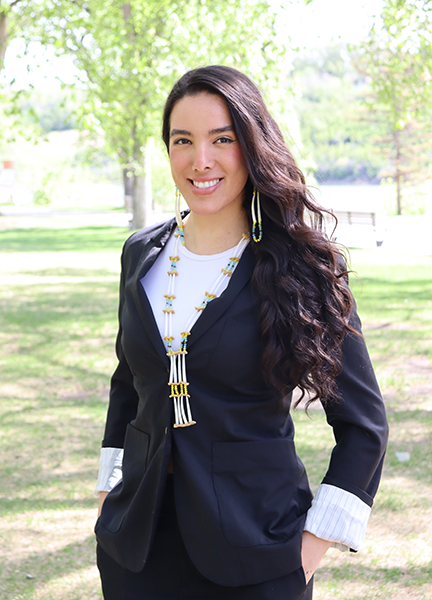
Learn more about Oyateki Partnership
“…the oyateki Aunties are empowering young indigenous people who are students to become the people in those leadership and change-making roles.”
When Celeste Bird first arrived in Saskatoon to begin her post-secondary journey at the University of Saskatchewan (USask), she stepped into an environment that was both familiar and foreign. Although she had grown up in Regina and spent time working in Quebec, the move still felt significant. It wasn’t just about adjusting to a new city; it was about finding her footing as a young Indigenous woman in a large, colonial-based institution.
As a member of Ahtahkakoop Cree Nation, Celeste carried with her not only hopes for academic success but also the weight of her community’s history and her own lived experience. Enrolled in Indigenous Studies, she came to university without an existing network in Saskatoon, unsure of her place in a large, unfamiliar environment.
But right away, those concerns began to subside. Celeste joined the Indigenous Student Achievement Pathways (ISAP) program, which offered smaller class sizes, Indigenous instructors, and a built-in sense of community. Through ISAP’s orientation at the start of the year, she was introduced to the Gordon Oakes Red Bear Student Centre, and to a group of women who would become her anchors throughout her first year.
They are known on campus as the “oyateki aunties”, part of the kahkisiw wellness supports, and they became more than just staff for Celeste; they transformed into mentors, advocates, and extended family.
It’s in Celeste’s nature to get involved and engage with the community, a trait she exhibited at USask. “I was really present in the community and spent a lot of time at the Gordon Oakes Red Bear Student Centre. I would go to their Soup and Bannock lunches, where people made presentations about programs and services on campus, including the oyateki aunties.”
“The aunties are there looking out for you, helping you out. If I was to have personal issues, I knew I could go to them for support. I know they’re dedicated to empowering students and helping us succeed.”
It was reassuring to feel that the aunties were always there. At the Soup and Bannock lunches, they sat among students, sharing laughter and stories. At campus events, they were present in the crowd, checking in with those they knew and meeting those they didn’t.
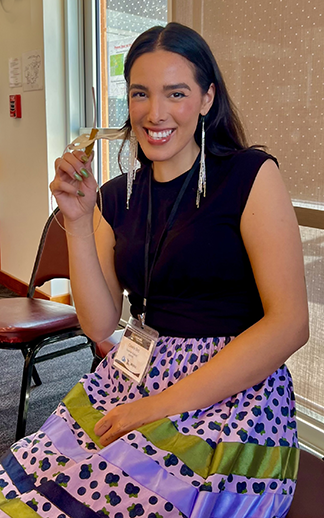
“They’re all very present and actively engaging with students, which is nice because it’s hard when you’re an exhausted student to seek out resources and support. Their visibility and presence are important.”
Celeste felt seen, heard, and valued in a way she hadn’t always experienced before. “It makes a world of difference knowing that you’re going to be okay because there are people there to lift you up when you’re struggling. As young Indigenous people, we deal with a lot. It’s not the same experience that a non-Indigenous person goes through, and that should be recognized.”
Through her involvement in the Indigenous Students’ Union (ISU), Celeste saw firsthand how the oyateki aunties supported the wider Indigenous student community. As finals approached, she reached out to Anteia, one of the aunties, for support in hosting study nights. With their help, the ISU was able to provide snacks and create a warm, welcoming space at Gordon Oakes where students could study together in community. It was more than just food, it was nourishment for the spirit.
Later in the year the aunties entrusted Celeste and her ISU peers with leading the Beading with Auntie circle. It was a gesture of trust and empowerment that Celeste didn’t take lightly.
“I was grateful for that because that’s a lot of trust to put into students. They weren’t micromanaging us; they were uplifting us and trying to provide us with the resources to be successful.”
The aunties, Celeste reflected, were doing more than just helping students navigate university, they were leading by example ensuring there was an environment for Indigenous presence, leadership, and culture.
“The biggest thing is just having the aunties there; that’s so special. It may be hard for those who are not women or Indigenous to understand, but for me, I didn’t have young women in my life before that I could look up to and who would be supportive.”
“The doors are all open, and the opportunities are endless. If you get out there and make connections with people, the aunties are there to support you. You just have to take that leap of faith. That’s really helped me on this journey, living back in Saskatchewan and feeling at home, feeling like I can be a leader in my community.”
“Anteia and all of the aunties are paving the way to create more space in the university. Not just physical space, but a presence of mind, consideration, and collaboration. I’m excited to see where things go from here!”
Celeste described the Gordon Oakes Red Bear Centre as more than just a space too; it is a home base, a place to smudge, meet Elders, and run into friends. Without it and the support of the aunties, she wasn’t sure she would have stayed in university at all.
“I would be lost without that. A lot of us live there; it’s our central space,” she says. “Having those supports feels great. I don’t think I honestly would be in university without that.”
Now entering her second year, Celeste is shifting her focus to Sociology and Indigenous Justice and Criminology. She feels grounded and passionate about giving back, helping other Indigenous students find the same sense of connection and strength she has experienced.
Perhaps most importantly, she no longer sees Saskatchewan as a place to escape. “I never wanted to move back,” she admitted. “I used to say I hated it here, but now I love it. I love the university and the network of aunties and community that have embraced me here.”
Thanks to the oyateki kahkisiw supports, her first year wasn’t just about surviving. It was about belonging, leading, and finding the encouragement to dream bigger.